Journal · Punta Cana
Dominican Food in Punta Cana: What to Eat Beyond the Resort
Discover Dominican dishes, understand the menu and plan a meal beyond your resort. Choose what to try, connect the visit with your actual accommodation and check the complete bill.
Start with the food you want to discover
A meal outside your resort can be a worthwhile part of the holiday in its own right. Start with a modest aim: try a Dominican lunch, order a dish you have not eaten before or leave time for an unhurried dinner. You do not need to turn the outing into a second excursion. A familiar setting with one new dish can be a better introduction than ordering everything at once.
Dominican food is a national cuisine, not a separate menu unique to Punta Cana. Restaurant menus in a holiday destination may combine local and international cooking. Ask which Dominican dishes are actually being prepared that day rather than assuming that a beachfront address or a Spanish menu establishes the style of cooking. This guide helps you choose a meal; it does not rank unverified restaurants.
Six dishes and menu terms worth knowing
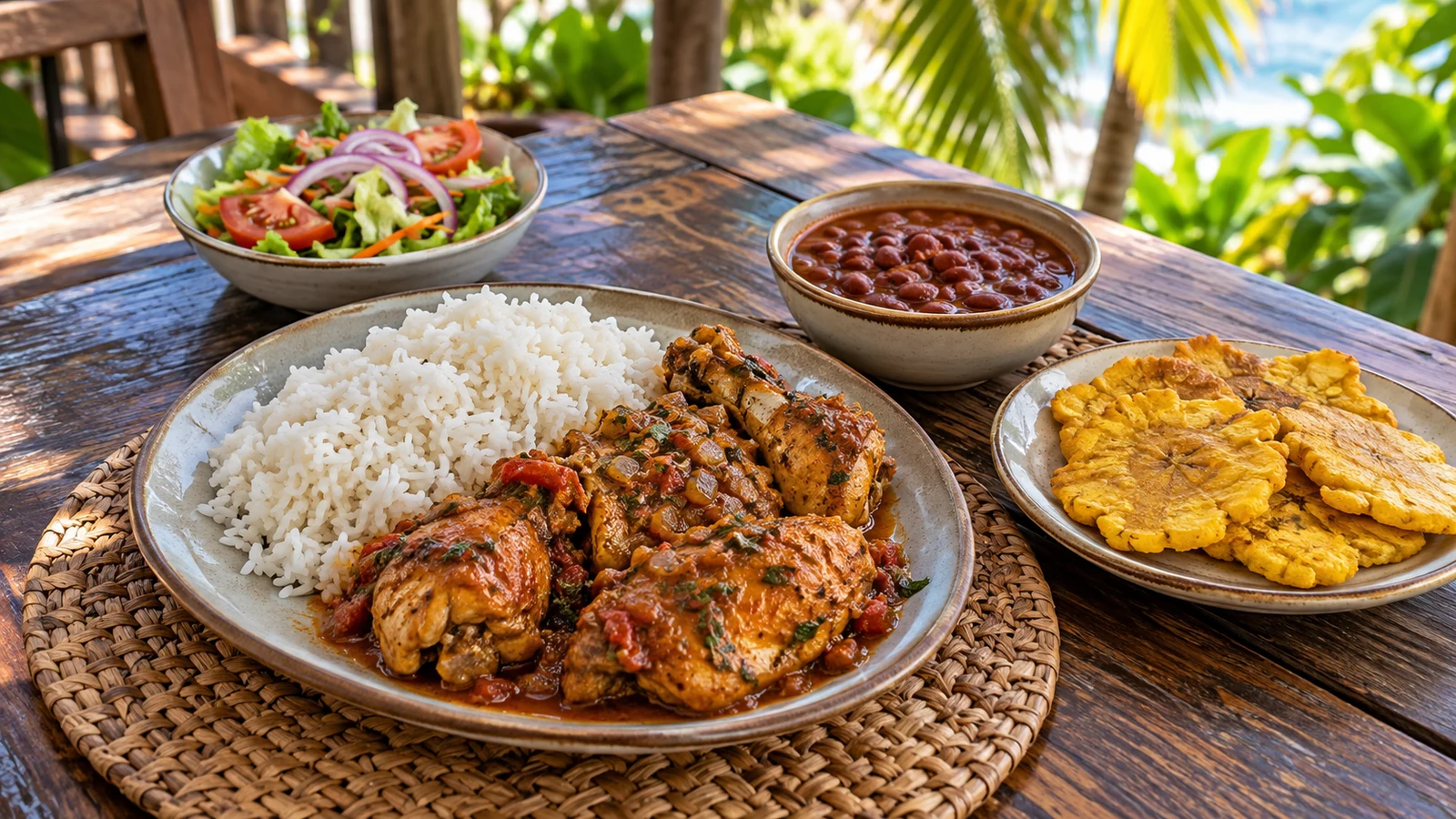
Plantain, rice, beans and slow-cooked dishes provide useful starting points. Mangú is mashed cooked plantain; tostones are flattened, twice-fried pieces of green plantain. They are different preparations. La bandera is a combination plate built around rice, beans and meat. Treat these names as a guide to a conversation, not a fixed recipe that every kitchen must follow.
Sancocho is a substantial meat-and-root-vegetable stew. Locrio combines rice with meat or another main ingredient. Mofongo uses mashed fried plantain, commonly with garlic and pork, though other versions exist. Portions, sides and ingredients vary. Ask what accompanies the dish, whether it is an individual serving and what the kitchen has changed in its version.
| Dish or term | What it describes | Useful question before ordering |
|---|---|---|
| Mangú | Mashed cooked plantain, often part of breakfast. | Which toppings and accompaniments come with this serving? |
| La bandera | A plate combining rice, beans and meat. | Which meat and sides are included today? |
| Sancocho | A hearty stew with meat and starchy root vegetables. | Which meats are used, and is it available today? |
| Tostones | Flattened green plantain pieces fried twice. | Are they a separate side or included with the main dish? |
| Locrio | Rice cooked with meat or another main ingredient. | What is the main ingredient in this version? |
| Mofongo | Mashed fried plantain, commonly with garlic and pork. | Does this preparation contain pork or have a filling or sauce? |
Choose the occasion: breakfast, lunch or dinner
For breakfast, asking about mangú gives you a clear starting point without committing to a large mixed order. At lunch, la bandera makes it easy to understand the relationship between the main dish and its accompaniments. For a longer meal, ask whether a stew such as sancocho is available and how it is served. These are ways to choose, not a promise that every dish appears at every service.
Match the meal to the day. A leisurely lunch can suit a free day; a dinner after a long excursion needs room for a variable return time. The seven-day Punta Cana itinerary helps you leave a genuine gap for eating out rather than squeezing a reservation between two tightly timed activities. Check the particular kitchen’s service hours before making the journey.
Choose the location from your actual accommodation
Use the full restaurant name and address when planning the visit. El Cortecito, Los Corales, Cap Cana and Uvero Alto are location clues, not interchangeable meeting points. Our Punta Cana area guide explains the different accommodation bases. A restaurant described as being in Punta Cana may still require a planned journey from your property.
If you want to combine a meal with the coast, choose the restaurant or entrance first and use the Punta Cana beach guide to understand the wider visit. Beach access does not establish permission to use a hotel’s restaurant, pool or loungers. For a venue inside a resort or gated development, confirm reservation requirements, visitor access and any conditions attached to the booking.
Reserve the meal and arrange the return
When contacting a restaurant, give your date, party size and any needs that affect seating or preparation. Ask whether a reservation is required, whether your chosen dishes are offered at that service and whether a deposit or cancellation condition applies. Save the confirmation with the venue name and actual entrance. A reservation at a restaurant is not automatically a transport booking.
Use our guide to getting around Punta Cana to compare the complete outward and return journey. If you plan to walk, assess the actual route rather than relying on a short distance on a map. For an evening meal, settle the return arrangement before leaving and clarify how to adjust it if dinner takes longer than expected.
Read the menu as a complete order
Do not judge the meal by the main-dish line alone. Ask whether rice, beans, salad, plantain or a sauce comes with it, and whether a pictured platter is an individual serving or intended for sharing. For fish or seafood, check whether the price is per portion, by weight or for the whole item before agreeing to the order. A menu photograph does not establish the final amount or serving size.
Simple Spanish questions can help: “¿Qué incluye?” means “What is included?”; “¿Es para compartir?” asks whether it is for sharing; “¿Cuál es el precio total?” asks for the total price. You can also ask staff to write down an unfamiliar ingredient or the agreed amount. Keep the original dish names when ordering so a translation does not obscure which preparation you mean.
Check the full bill before comparing prices
First establish the currency and whether the displayed figures include taxes and service charges. On the bill, ITBIS identifies a tax item, while propina legal identifies the statutory gratuity. These are different from an additional voluntary tip. Ask for an explanation of the actual charges rather than assuming the menu figure is the final payable amount or adding another tip automatically.
Before ordering, check accepted payment methods and ask how any foreign-currency payment would be converted. Compare the food, drinks, sides and applicable charges for the same group, then include the separate transport cost in your outing budget. This article does not publish a universal restaurant price, require an extra tip or apply one charging rule to dine-in, takeaway and delivery alike.
Order around your group’s dietary needs
A dish name does not establish its full ingredients. A bean dish, rice preparation or plantain side can contain stock, meat, dairy or another ingredient that is not obvious from its name. If an ingredient matters to you, ask about the specific preparation, sauces and accompaniments. Do not treat a meat-free appearance or a familiar recipe from home as confirmation of what this kitchen serves.
For a food allergy, describe it clearly and ask whether the kitchen can manage the necessary preparation and cross-contact precautions; a translated label alone is not confirmation. With children, ask about portion sizes and a suitable serving rather than assuming a children’s menu exists. Our Punta Cana family guide covers the wider planning questions when a meal is part of an outing.
Keep restaurant plans separate from excursion meals
A tour described as including lunch does not necessarily offer a choice of Dominican dishes, restaurant service or accommodation of a dietary requirement. Check the actual menu or meal format with the operator. An independently chosen restaurant is a different arrangement, with its own reservation, payment and travel needs. Do not infer a meal’s contents from the destination or the tour photograph.
On a free day, a meal can be the main plan rather than an add-on to another booking. After a long island or regional excursion, leave space for the confirmed return and decide whether a fixed dinner reservation is realistic. For other ideas, use the existing Punta Cana travel guides; choose an experience because it suits the day, not because every restaurant visit needs an excursion.
Common questions before eating beyond the resort
Can you eat outside an all-inclusive resort? You can plan an independent restaurant visit, but check the restaurant’s access and service arrangements; your hotel package does not imply payment for that meal. Do you need a reservation? Ask the venue for the particular date and party size. Is Dominican food always the same? No: the dish names are useful starting points, while recipes and menus vary.
What should you try first? Choose one preparation that appeals to you, ask what comes with it and order an amount that suits your group. Before leaving, have the venue confirmation, complete journey and dietary questions settled. If the meal is part of a wider day out, our planning contact page can help you identify the travel and activity details still to confirm; it does not serve as a restaurant reservation.
Plan your next step
Make room for a Dominican meal
Choose the dish and the restaurant first, then fit the visit around your accommodation and plans. If you need help connecting it with a wider day out, tell us where you are staying and what you want to do.
Ask a planning question